If you’ve been curious about ADVANCER® nitride bonded silicon carbide (NSiC) kiln shelves but aren’t ready to commit to a full set, ADVANCER® Cookies offer the perfect entry point. These miniature 4” round kiln shelves pack all the performance advantages of ADVANCER® into a compact, affordable format—ideal for test kilns, sample development, and getting a feel for how ADVANCER® Kiln Shelves work with your clay bodies and glazes.
What Are ADVANCER® Cookies?
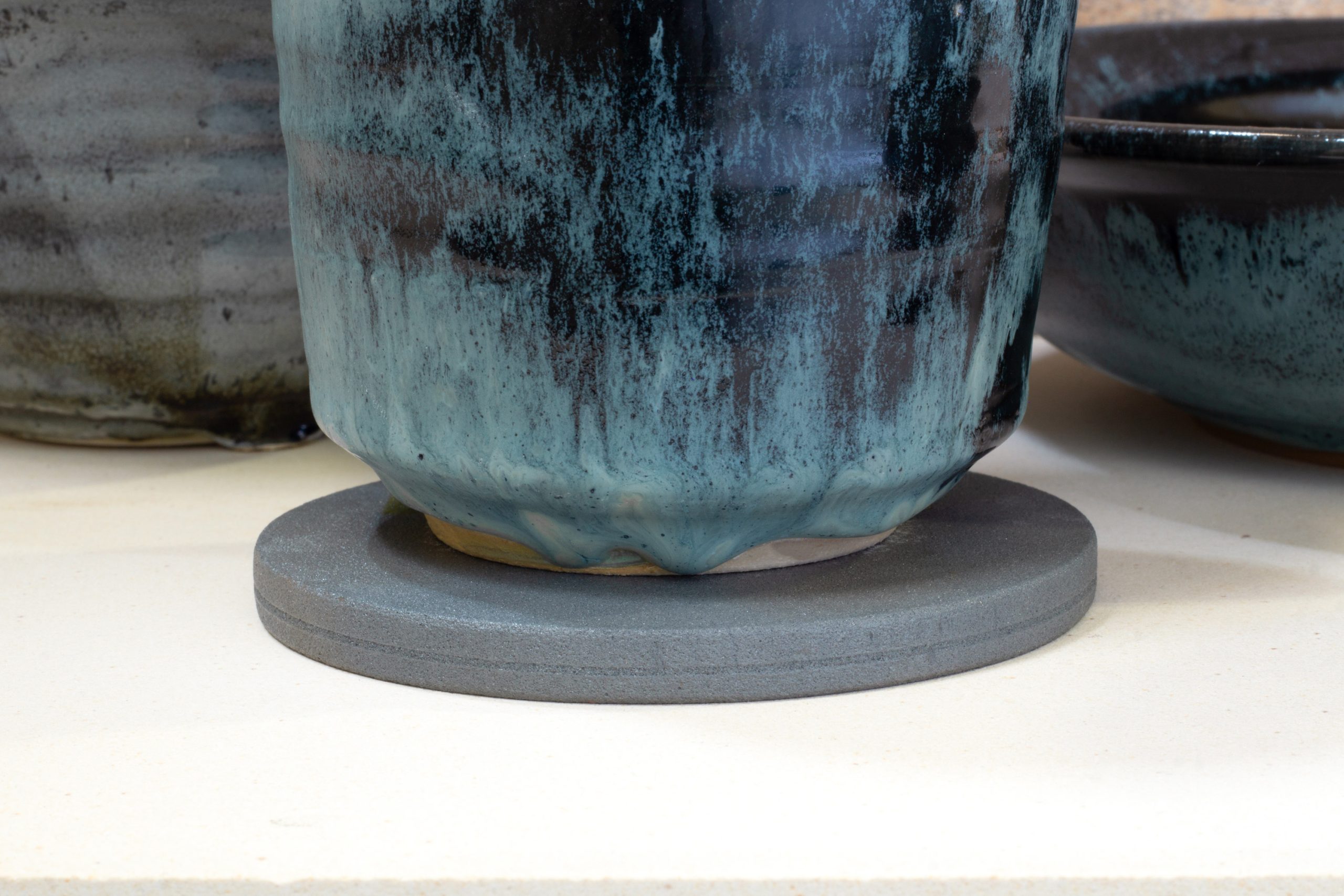
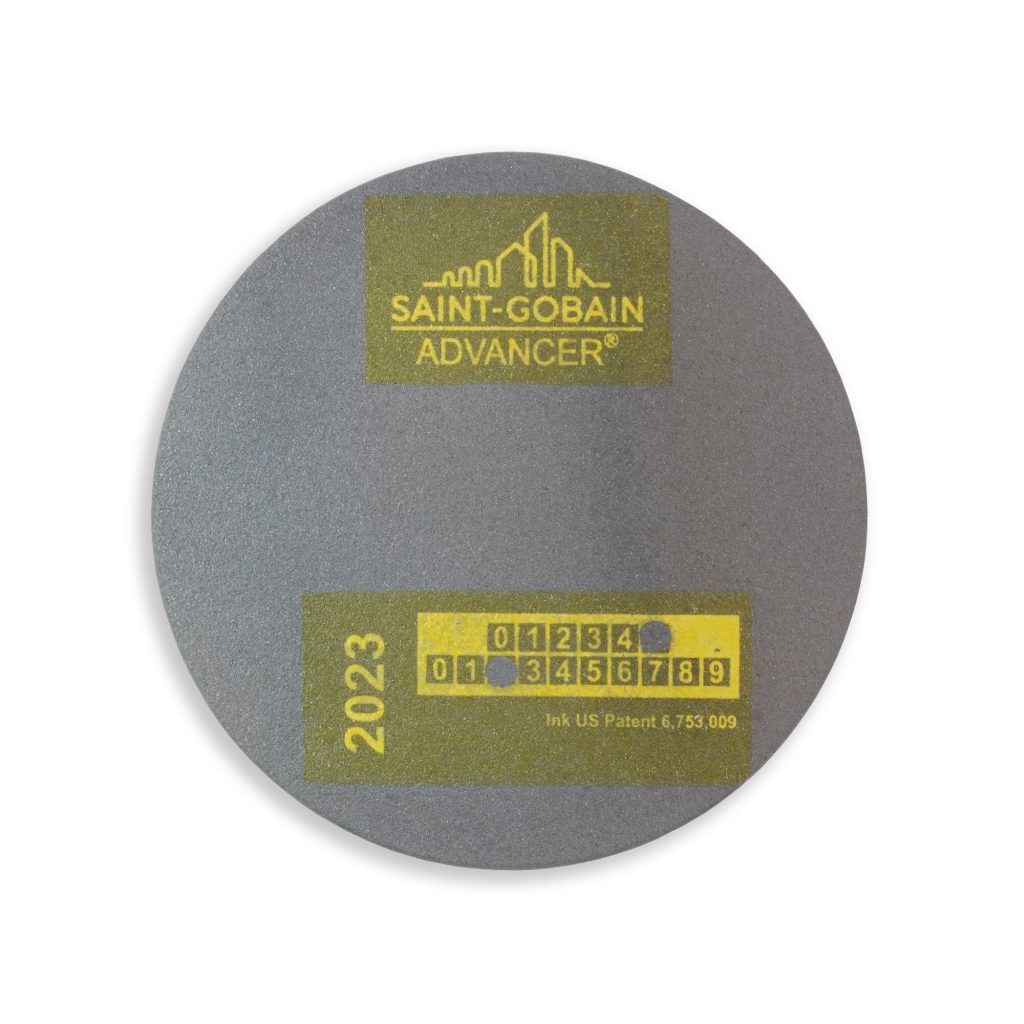
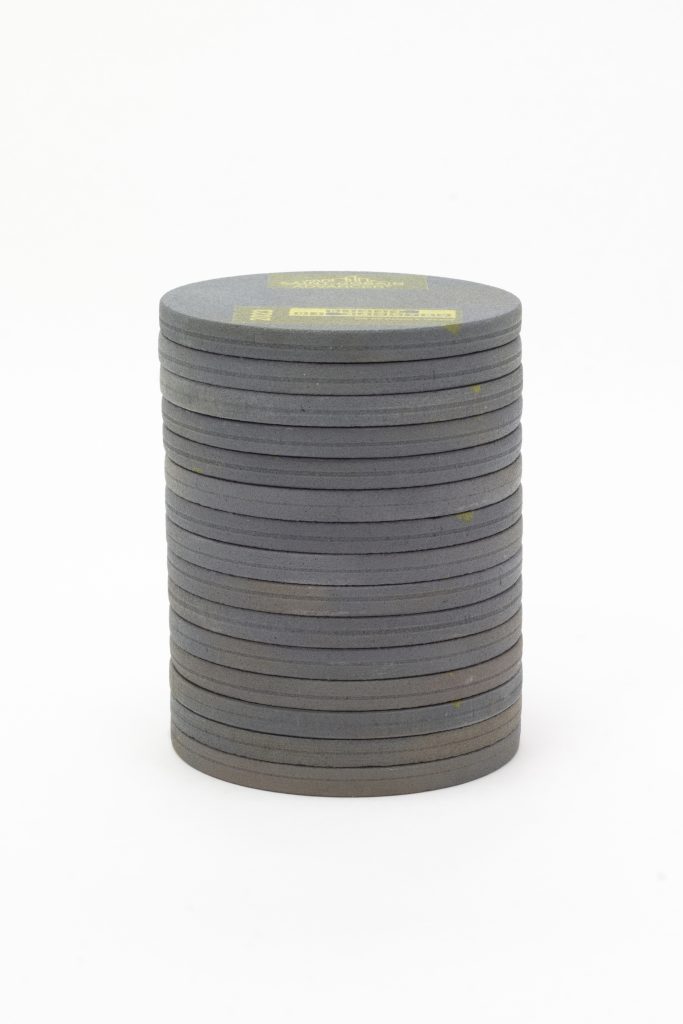
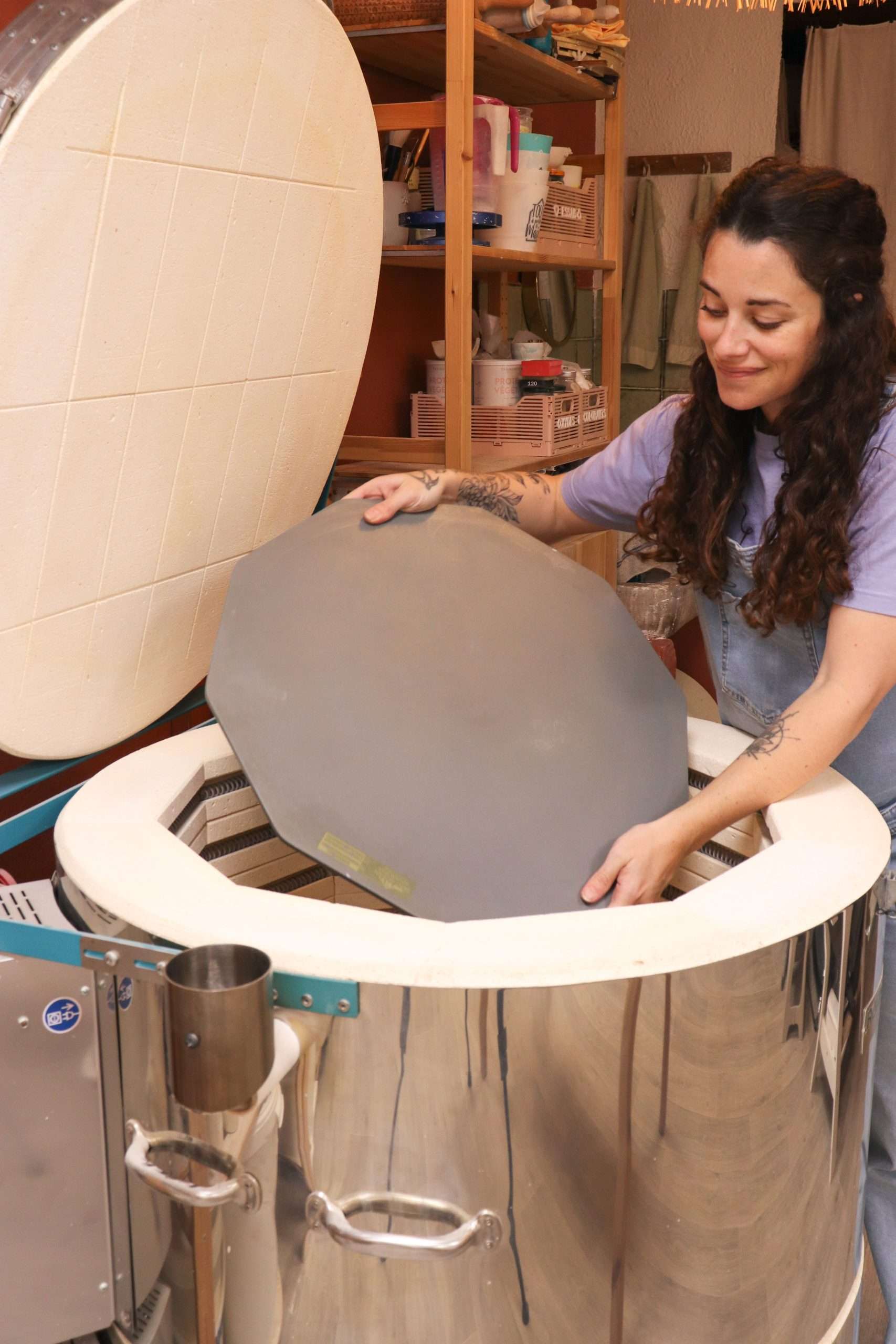
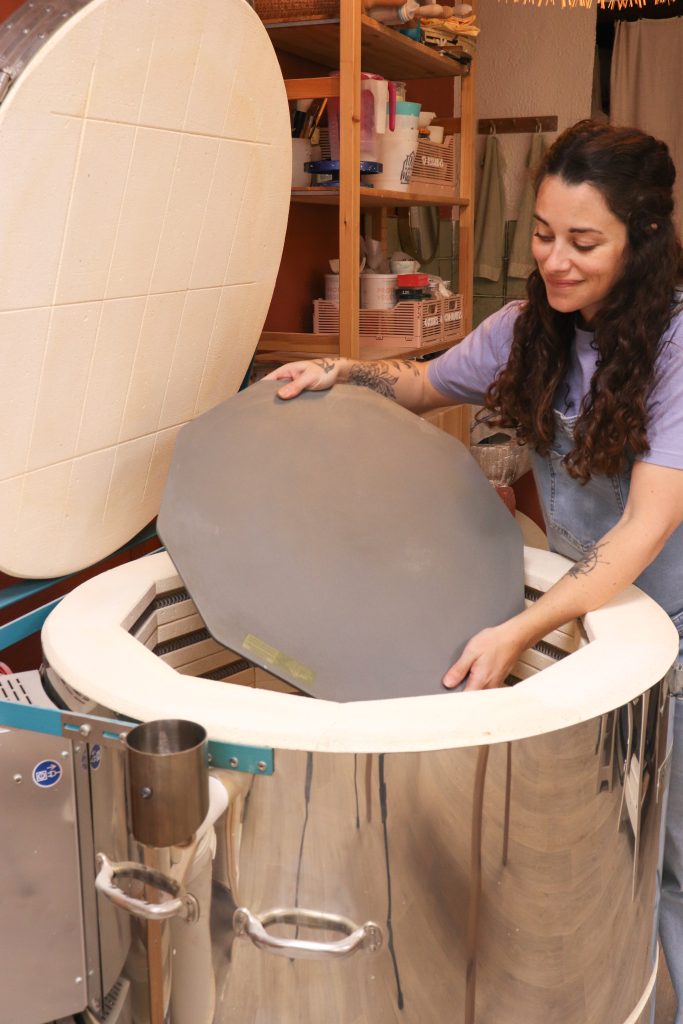
ADVANCER® Cookies are 4” round NSiC shelves that bring the same ultra-thin, non-porous, high-strength material into versatile configurations. ADVANCER® Cookies measure are 1/4” thick, which is even thinner than traditional ADVANCER® shelves (5/16” thick). ADVANCER® cookies can be placed directly on cordierite kiln shelves, so you don’t need to replace your entire kiln furniture setup to benefit from ADVANCER’s glaze resistance. Use them strategically under individual pieces where glaze runs may occur and protect your cordierite shelves. They’re particularly brilliant for experimental glazes that would potentially stick to cordierite shelves causing significant clean up.
Dip Your Toes Into the World of ADVANCER® Kiln Shelves
Understandably, not everyone is ready to invest in a complete set of ADVANCER® shelves, and that’s exactly why ADVANCER® Cookies make sense. They let you experience the ADVANCER® advantage—lightweight handling, easy glaze cleanup, perfect flatness—without the upfront cost of full size shelves. Run your tests, see how your clay body reacts, experiment with different glazes to see how they behave on the non-porous ADVANCER® surface. Once you’ve experienced how effortlessly glaze drips scrape off, you’ll understand why potters rave about ADVANCER® shelves.
Strategic Protection for Risky Glazes
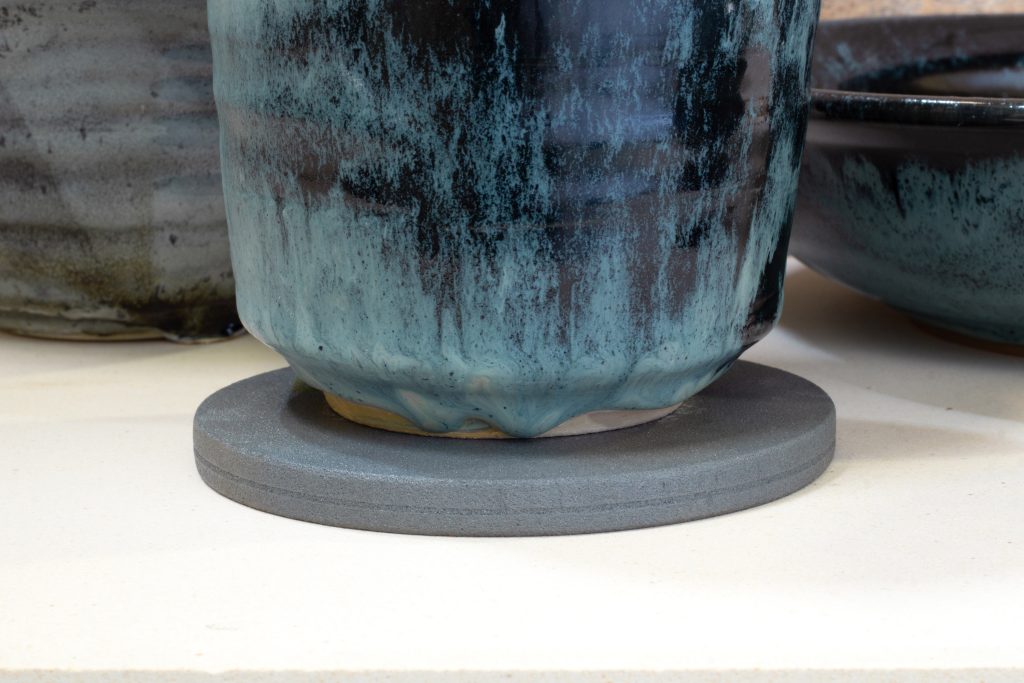
We all have those glazes—the beautiful, runny ones that make us nervous. If you’re developing new glaze recipes, testing clay bodies, or running glaze combination experiments, ADVANCER® cookies are indispensable. Place an ADVANCER® Cookie directly under pieces with unpredictable glazes. If it runs, the glaze sits on the non-porous nitride-bonded surface instead of embedding into your cordierite shelf. Cleanup is simple: a quick tap and polish with the GlazeEraser and the drip will pop right off. Your cordierite shelves stay clean. You avoid the grinding session + kiln wash touch up that would otherwise follow, and prevent shelf damage.
Creative Stacking in Tight Spaces
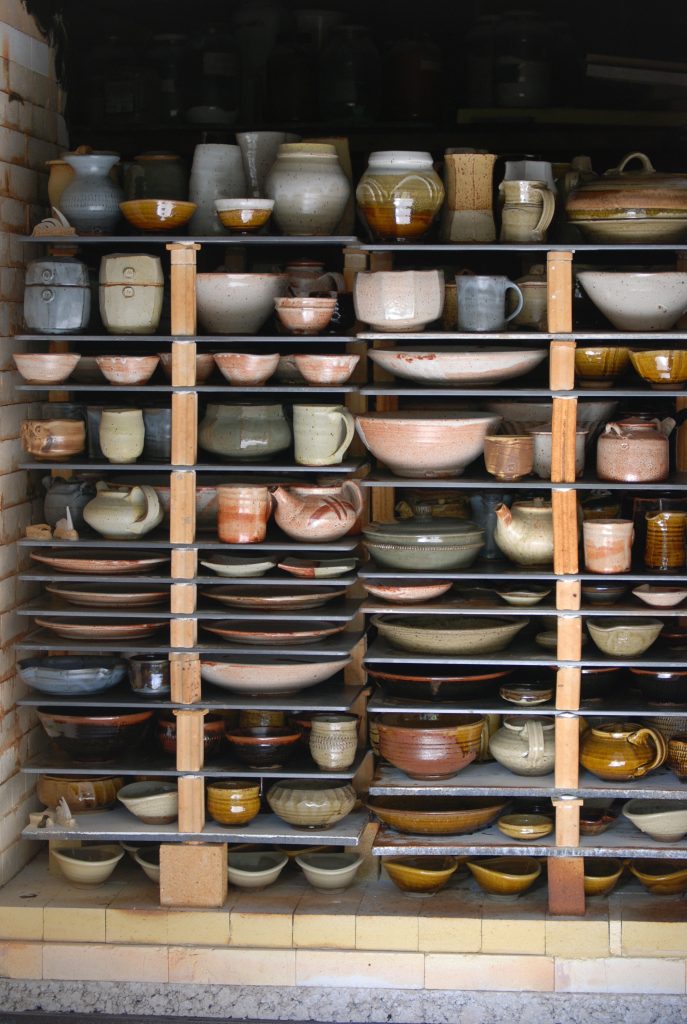
Loading a kiln often requires creative solutions to fit all the work you want to fire. This is where ADVANCER® Cookies shine. They can be used with kiln posts to create unique configurations. Perhaps you don’t have room for another entire layer of shelves, but you can fit a pot posted up on a 4” ADVANCER® Cookie.
ADVANCER® Cookies prove that good things come in small packages. Whether you’re testing the waters before a larger investment, experimenting with drippy glazes or solving specific challenges in a compact kiln, these versatile 4” round shelves deliver ADVANCER® performance exactly where you need it.
Choosing the right kiln shelves is one of the most important decisions for your ceramic studio. The shelves you select affect everything from how many pieces you can fire at once to your energy costs, handling ergonomics, and maintenance workload. This comprehensive guide helps you understand the real differences between kiln shelf materials and find the best option for your specific firing needs.
Understanding Kiln Shelf Materials: What Makes Them Different
Not all kiln shelves are created equal. The material your shelf is made from determines its strength, weight, thermal properties, and lifespan. Here’s what you need to know about the most common kiln shelf materials:
Cordierite Kiln Shelves (Traditional Heavy-Mass)
Cordierite has been the standard kiln shelf material for decades. These shelves are relatively inexpensive upfront, but that lower cost comes with significant trade-offs. Cordierite is heavy—typically 5/8-inch to 1-inch thick—which means you’re heating a lot of kiln furniture mass along with your ware. Cordierite has a strength of about 2,175 PSI vs. 24,656 PSI for ADVANCER® Kiln Shelves. Cordierite is 25% porous, which enables glaze to embed into the surface over time. Maximum use temperature for cordierite is around 2336°F (Cone 10).
The hidden costs of cordierite: Heavy handling strains your back. High mass can mean longer firing cycles, especially in cooling and higher energy consumption. Porous surfaces require grinding to remove embedded glaze. Shelves warp, crack, and break, requiring frequent replacement.
ADVANCER® NSiC Kiln Shelves (Low-Mass, High Performance)
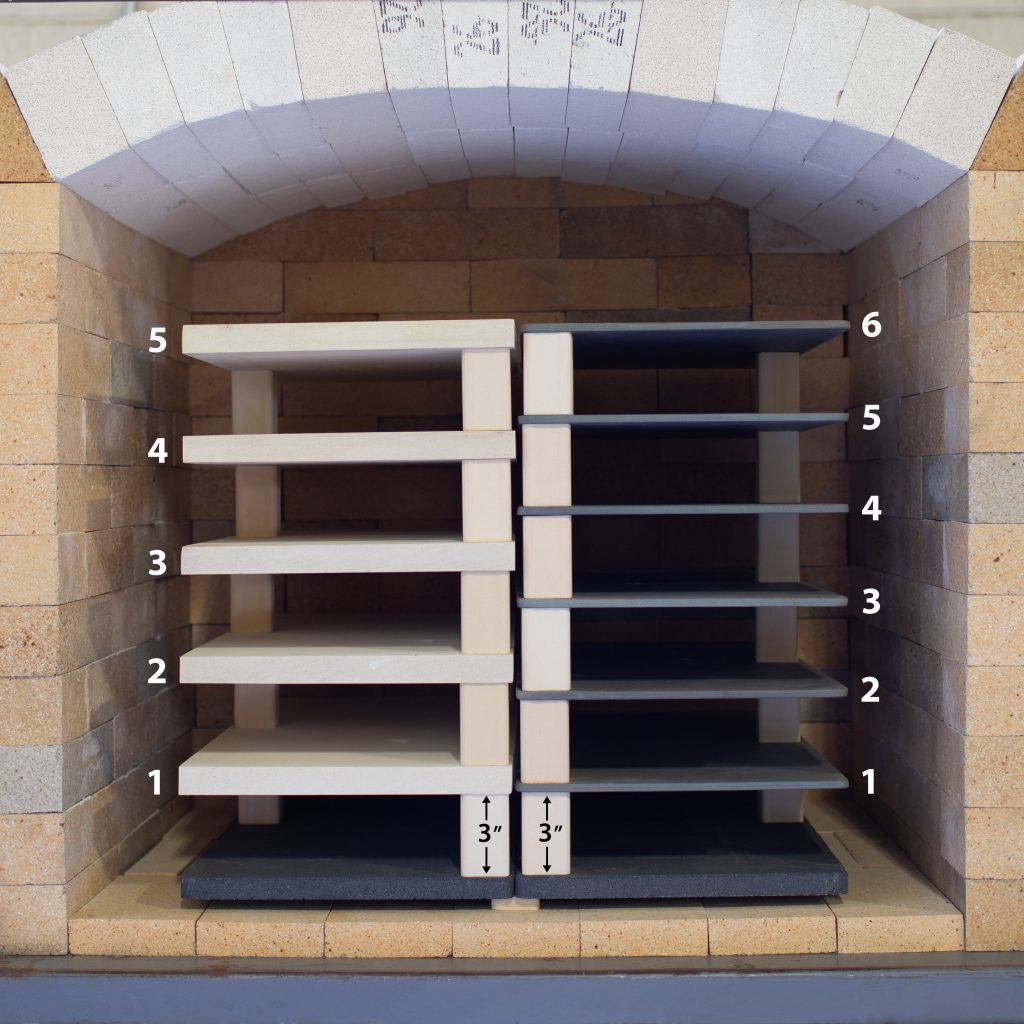
ADVANCER® Kiln Shelves represent a fundamental shift in kiln furniture design. Composed of fine grained nitride-bonded silicon carbide (NSiC), they are only 5/16-inch thick—about half the thickness of traditional cordierite and hollow core shelves. Yet they’re 19 times stronger (25,000 PSI vs 2,175 PSI) and can weigh 50% less than conventional solid cordierite shelves. That’s the ADVANCER® advantage.
The Material Comparison: Side-by-Side Specs
Here’s what the numbers mean in practice: The thinness of silicon carbide shelves gives you more vertical space in your kiln for stacking ware. The light weight makes loading and unloading dramatically easier—no more back strain from wrestling heavy shelves. The high thermal conductivity means you get heat in and out of your kiln faster.
The Four Questions to Ask Before Buying Kiln Shelves
1. What Temperature Range Are You Firing?
Silicon carbide shelves like ADVANCER® can handle maximum temperatures up to 2600°F, making them suitable for virtually all ceramic applications including cone 10 reduction, soda firing, and more (not suitable for Raku firing). Typical maximum service temperature for Cordierite is 2372°F (Cone 10). Firing in reduction may intensity reactions and strain the integrity of cordierite shelves. This is not an issue with Advancer shelves given their strength and higher temperature ability.
2. How Often Do You Fire?
If you fire multiple times per week, the efficiency gains from Advancer shelves can add up quickly. Less kiln furniture mass means every firing cycle uses less energy. For production studios firing 2-3 times weekly, the energy and space savings alone can offset the initial investment over a relatively short period of time. Hobbyists firing less frequently might prioritize other factors like ease of handling and surface maintenance.
3. What’s Your Biggest Pain Point?
Different studios have different frustrations. Match your main concern to the material that solves it:
• Back strain from heavy shelves? Advancer (NSiC) shelves are thinner and can weigh half as much as solid cordierite.. Mike Arbini reports: ‘People are amazed at how light these shelves are. There’s been a lot of people complaining about back injuries trying to lift heavy traditional shelves. The ergonomics is very good.’
• Hours spent grinding glaze off shelves? Advancer’s nitride-bonded silicon carbide, non-porous surface won’t absorb glaze. ‘You can easily chip off glaze runs and anything that sticks to it. No grinding, simple cleaning up. The maintenance is drastically reduced.’
• Warped or cracked shelves? Advancer shelves stay flat. ‘These are made flat and stay flat so there’s no warping after repeated cycling even under heavy loads.’
• Running out of kiln space? Thinner shelves = more room for your ware. You can fit more pots in every firing, which means more work to sell in every firing, increased profits and ROI. Higher productivity is one of the ways Advancer shelves can pay for themselves over time.
4. What’s Your Total Cost of Ownership?
Purchase price is only part of the equation. Consider:
• Energy costs per firing (silicon carbide shelves can increase the efficiency of firings)
• Service life (cordierite warps and degrades over time, Advancer shelves can last decades)
• Labor spent on maintenance and grinding (Advancer cleans off easily, even after hundreds of firings)
‘This is a product—yes, it’s an investment—but it is something that you’ll have for decades,’ Mike Arbini notes. ‘If you take care of the product, it will be there for a long time. Where traditional cordierite shelves will wear over time, warp, crack, break, and you have to replace them—that’s an added cost. ADVANCER: once you buy it, if you take care of it, you’re not going to buy them again.’
Best Kiln Shelves by Use Case
Best for Production Studios & High-Volume Firing
Winner: ADVANCER® – The combination of increased thermal conductivity, increased load capacity, reduced maintenance, and extended service life makes silicon carbide the clear choice for any studio firing regularly. The ROI is measurable and ergonomic and maintenance benefits are immediate.
Best for Educational Studios & Schools
Winner: ADVANCER® – Durability and low maintenance are critical when multiple staff members and students handle the same equipment. The non-porous surface resists glaze damage, the strength prevents warpage, and the lighter weight is safer.
Best for Soda Firing & Reduction Firing
Winner: ADVANCER® – The extremely low porosity of NSiC means soda and allkalis won’t penetrate the shelf. Drips can be scraped off easily without grinding. This is a game-changer for soda kilns where operators traditionally faced extensive shelf maintenance after every firing.
Best for Hobbyists on a Tight Budget
Consider: If you fire infrequently (less than once per month) and budget is the primary concern, cordierite offers a lower upfront cost. However, even hobbyists benefit from lighter handling, reduced maintenance and increased loading space with NSiC. Cordierite shelves can begin to warp right away. Consider investing in ADVANCER shelves to make your pottery practice more enjoyable and less physically demanding. You can use ADVANCER shelves with your existing kiln shelves which allows you to purchase them over time, spreading out the cost.
What Potters Say About Making the Switch
Mike Arbini shares what he hears from potters: ‘I think what’s exciting for me—we were at the NCECA Trade Show and it’s having customers come up and just tell you how happy, how useful and glad they are that they bought this product and how much it has helped them in their day-to-day operations of firing pottery. It’s been nonstop stories of: thank you very much, we love your product, it’s the best, I’m glad I made that decision.’
Ready to Find the Best Kiln Shelves for Your Studio?
ADVANCER kiln shelves are built for potters and studios that want more consistent firings, easier handling, more productivity and less maintenance. By reducing kiln furniture mass and standing up to common firing messes like glaze runs and soda drips, they help you spend less time dealing with kiln furniture—and more time making work you’re proud of.
Any glaze, clay etc. that is fused to the Advancer shelf surface can always be removed with care due to the extremely low shelf porosity of <1%. Removing glaze runs, halos and any debris is recommended whenever it appears. You may use sandpaper, a scraper or a GlazeEraser® Hand Tool. This will help avoid long term buildup that could ultimately cause your
pots to stick (given enough residue). In more severe cases of buildup, an angle grinder with an abrasive disk can be used for removal. Additional information on this topic is covered in our “How to Clean an Advancer Kiln Shelf” video on Kilnshelf.com.
Every shelf surface is unique and can vary from shelf to shelf. This includes marks caused by the kiln furniture used to fire the shelves during manufacturing. Variations in color, gloss and surface lines from the slip casting process are common. Expect the color and glassy surface to change during the initial firing. The shelf surface will evolve over time, this includes surface healing over halos and dull spots that may appear from removing glaze or kiln debris.
New Advancer kiln shelves are ready to use. They have already been fired to temperatures in excess 2700F (cone 16) during manufacturing. It is not necessary to conduct an initial seasoning, bake in or dry out firing. Use a damp sponge to wipe off any surface dust prior to your initial firing.
You can use your existing kiln furniture with Advancer kiln shelves. This includes other kiln shelves and posts or stilts. Advancer shelves do not require special posts. Posts may stick to the shelf surface. Kiln washing the ends of the posts will take care of this issue. We do not recommend using full hard bricks for posts with Advancer shelves. Hard brick soaps are fine to use.
As an alternative to using kiln wash, many potters use small amounts of alumina hydrate between the pot bottom and shelf surface. If using wax approximately 1 heaping tablespoon of alumina hydrate to 1 cup of wax is usually sufficient. Stir the mixture with a brush before each application to the bottom of the vessel. You may need to experiment depending on your clay body and firing temperature.
While many individual customers report that they do not need to use a wash coat on their ADVANCER® shelves, we generally recommend using a suitable high alumina wash on ADVANCER® shelves – particularly in studio or classroom settings where multiple users are present.
Stoneware and earthenware clay will not stick. Porcelain clay bodies and some B-Mix clays are highly fluxed with feldspar, usually to achieve translucency. The higher the firing temperature is, the greater the potential for the flux to interact with the oxide glass layer of the shelf. The higher the feldspar content in porcelain type clay bodies, the more likely they are to stick. Pieces with trimmed foot rings supporting larger pieces such as bowls tend to stick more than broad flat-bottomed pieces. When in doubt, the best thing to do is test how the clay interacts with the bare shelf surface.
Due to the extremely low porosity of ADVANCER (less than1%) vs. conventional silicon carbide
(18% typical) and cordierite (30% typical), it is true that there is much less of a tendency for glaze to penetrate into or stick onto the ADVANCER surface. Never the less it is still possible for glaze to react with the protective oxide glass surface of ADVANCER, especially at higher temperatures, and bond onto the ADVANCER surface. Glaze drips are usually easily removed without grinding because extremely low porosity of ADVANCER. On the other hand glazes that volatilize at temperature, leaving a fine mist of glaze on the shelf may require light grinding or sanding for complete removal.
Kiln Wash Formula
The general formula we recommend for kiln wash is 50 alumina hydrate, 25 kaolin, 25 calcined kaolin – all by weight. Apply 1-2 thin layers of kiln wash letting it dry between coats. The consistency for the wash application should be like light cream or half and half, not thick like heavy whipping cream or paste. Applying wash when the shelves are warm will help accelerate the drying process. Due to the ultra-low surface porosity of <1%, the wash will ultimately dry suspended on the glass surface of the shelf and will not soak down into the body of the shelf as with more porous shelves such as cordierite.
Due to the high amount of flux used in porcelain clay bodies (up to 50% typical) to achieve translucency, it is not uncommon for porcelain clay bodies to stick to the ADVANCER surface. The higher the firing temperature is, the greater the opportunity for the flux to interact with the oxide glass layer of the shelf. Pieces with trimmed foot rings supporting larger pieces, like bowls, tend to stick more tenaciously than broad, flat bottomed pieces due to increased pressure on contact area. Some cone 6 porcelains may not have a sticking problem on ADVANCER. Please contact us for more specific information. You may also refer to the article “Why Porcelain May Stick to ADVANCER” on this website for a more technical explanation.
In general you do not need any special posts for use with ADVANCER® shelves. Round or square cordierite posts with a hole down the center will work just fine. Hard fire brick soaps (2-1/4” x 2-1/2”x 9”L) in various lengths may also be used. It is not advisable to use full hard bricks (2-1/2” x 4-1/2”x 9”L) as posts with ADVANCER due to potential uneven thermal gradient problems created by such massive shelf/post contact areas. Wadding between shelves and posts is frequently used to promote setting stability, and is an acceptable practice with ADVANCER shelves. It is also recommended to use a suitable kiln wash on the ends of posts to prevent sticking between ADVANCER shelves and posts after repeated firings with posts in the same spot on the shelf surface.